Leadership decisions
Work through decisions that cannot wait for perfect information, from setting priorities to holding a clear line when the room is under pressure.
 Start a conversation
 Leadership coaching for educators
Steady, practical perspective for educators and school leaders navigating people, pressure, and the decisions that shape a learning community.
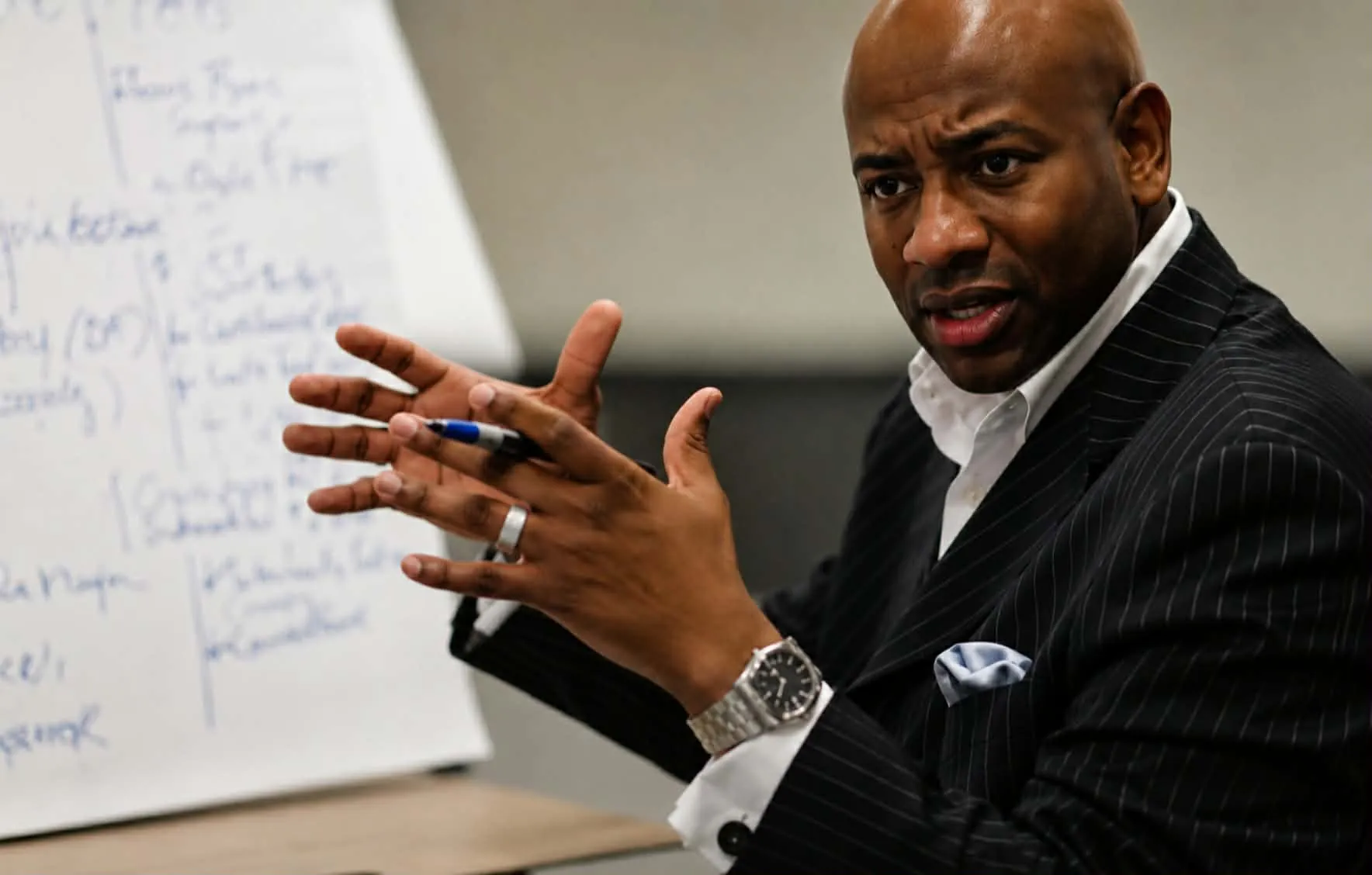
For the work behind the title
School leaders are asked to make decisions that affect students, families, staff, and the wider community, often while the pace of the day leaves little room to think. They may be setting direction, holding a difficult conversation, responding to a concern, or trying to rebuild trust after a hard season. The responsibility is real, and the next move is rarely obvious.
Leadership coaching with Dr. Spells creates room to sort through that work with a grounded, outside perspective. It is not a script for running a school, and it is not a generic exercise in motivation. It is a focused conversation about what is happening, what matters most, where the pressure is coming from, and how to move with clarity and responsibility.
Dr. Spells brings experience across education, public safety, policy, leadership, and community work to the conversation. That lens helps educators look beyond the immediate issue without losing sight of the people affected by it. The aim is practical: stronger judgment, clearer communication, and a next step that fits the reality of your school or district.
What coaching can strengthen
Work through decisions that cannot wait for perfect information, from setting priorities to holding a clear line when the room is under pressure.
Create a more honest working rhythm, so concerns can surface early and people understand how to move forward together.
Turn a new expectation, initiative, or hard conversation into practical commitments people can carry into the next school day.

A place to think clearly
Many leadership challenges in education arrive as a knot rather than a clean question. A team may be tired, a message may have landed poorly, an initiative may be losing momentum, or a decision may be creating tension between what feels urgent and what is truly important. Moving too quickly can deepen the problem. Waiting too long can do the same.
Coaching gives the issue enough attention to become understandable. Together, you can name the patterns around the problem, separate assumptions from facts, identify who needs to be heard, and decide what accountability looks like in the situation. That work is especially valuable when a leader needs to remain calm and clear without pretending that the answer is simple.
The conversation stays connected to the practical realities of school life: the people in the building, the expectations already in place, the history behind the issue, and the impact on students. From there, the focus turns to what can be communicated, what needs to change, and what will help the next step hold after the meeting ends.
When this work is useful
A practical engagement
Begin with the people, pressure, and purpose behind the request. A useful engagement starts by identifying what is actually being asked of the leader or team.
Surface the questions, assumptions, and competing priorities that may be keeping the situation stuck. The conversation makes room for candor while staying anchored in responsibility.
Translate perspective into action: a conversation to lead, a boundary to set, a message to clarify, a group to bring together, or a commitment to carry forward.
Designed for a school calendar
Education does not pause while leaders think through a challenge. The next bell rings, families need an answer, staff members return to their classrooms, and a decision made in one meeting can change the tone of the next week. Coaching respects that pace. It creates enough room for reflection without treating the work as separate from the school day that is already moving.
Some conversations are most useful before a difficult decision is announced, when a leader needs to clarify the purpose, anticipate the questions people may bring, and decide how to communicate with steadiness. Others are useful after a meeting, incident, or conflict has exposed something the team needs to understand more clearly. In either case, the focus is on helping leaders respond intentionally rather than simply reacting to the loudest pressure.
The work can be shaped around an individual conversation, a leadership-team session, or a sequence of support across a larger change effort. A principal may need a place to prepare for a staff conversation. A district team may need help naming what has made follow-through difficult. A school may need a focused discussion about whether its daily practices match the culture it wants students and adults to experience.
Coaching also helps leaders protect the difference between activity and progress. A full calendar can make a school look busy while the most important questions remain untouched. By returning to the purpose behind a decision, the people it affects, and the support required to carry it out, leaders can spend their time on work that moves the community forward instead of adding another task to an already crowded day.
Each engagement begins with the context that matters: who is involved, what has already happened, what is at stake, and what a responsible outcome would look like. That keeps the conversation grounded in the work people actually have to carry when they leave the room.
Built for the whole school
Educators do not lead in separate lanes. A question about team culture can affect student trust. A safety concern can expose a communication gap. A new expectation can ask more of staff than the system has prepared them to carry. Coaching helps leaders see those connections, so the response supports the school community instead of treating each issue as isolated.
For principals carrying the daily responsibility of leading a building, executive coaching for principals offers a focused space to work through leadership decisions, team dynamics, and the conversations that cannot be left to chance.
For schools working specifically on readiness, trust, and safety, Dr. Spells also offers school safety training for educators and leadership teams. That focused engagement can stand on its own or complement leadership coaching when a school needs a broader shared conversation.
Frequently asked questions
Leadership coaching is for educators, school leaders, administrators, and teams carrying responsibility for people, culture, and decisions. The work can support an individual leader, a small leadership team, or a larger group when a facilitated conversation is the better fit.
No. The right fit can include teacher leaders, department chairs, student-services professionals, public-safety partners, nonprofit leaders, and others whose role calls for steady judgment and influence.
The focus begins with the issue in front of you. That may include leadership presence, difficult conversations, team trust, school culture, a change effort, accountability, decision-making, or a challenge that does not fit neatly inside one job description.
Yes. Some organizations begin with a broader conversation, then use coaching or facilitated dialogue to help the people responsible for the next steps carry the work forward.
Use the booking page to share the context, the people involved, and what you need to make clearer. Dr. Spells can then recommend a format that fits the work in front of you.
Start with the real question
Share what your school, district, or leadership team is navigating. Dr. Spells will help shape the right conversation for the people responsible for the next step.
Discuss leadership coaching