Daily routines
Look at how people move through arrival, transitions, visitors, dismissal, and ordinary concerns. The goal is to see whether expectations are clear when the day is busy, not just when a plan is being discussed.
 Start a conversation
 School safety assessment
A practical review for school and district leaders who need a clearer view of readiness, communication, daily routines, and the work that follows.

See the real conditions
School leaders are often asked to improve safety in response to a concern, a new requirement, or a difficult moment. The instinct to act quickly is understandable. But a useful next step begins with an honest view of the setting: how people share information, where responsibilities are clear, which routines hold under pressure, and where a student or staff member might be left uncertain.
A school safety assessment with Dr. Spells creates room for that closer look. It is a practical review of the everyday conditions that shape readiness, including communication, roles, relationships, routines, and the follow-through people experience after a concern is raised.
Dr. Spells brings a perspective shaped by education, public safety, policy, leadership, and community work. That range helps a school examine its situation without treating safety as a checklist separate from learning or trusting a single meeting to solve a deeper issue.
What the review can surface
Look at how people move through arrival, transitions, visitors, dismissal, and ordinary concerns. The goal is to see whether expectations are clear when the day is busy, not just when a plan is being discussed.
Examine how a concern travels, who needs to know, what information is useful, and where assumptions can slow a response or leave a person unsure of what to do next.
Consider whether students and staff know how to raise a concern, whether they believe they will be heard, and how the school builds confidence through steady follow-through.
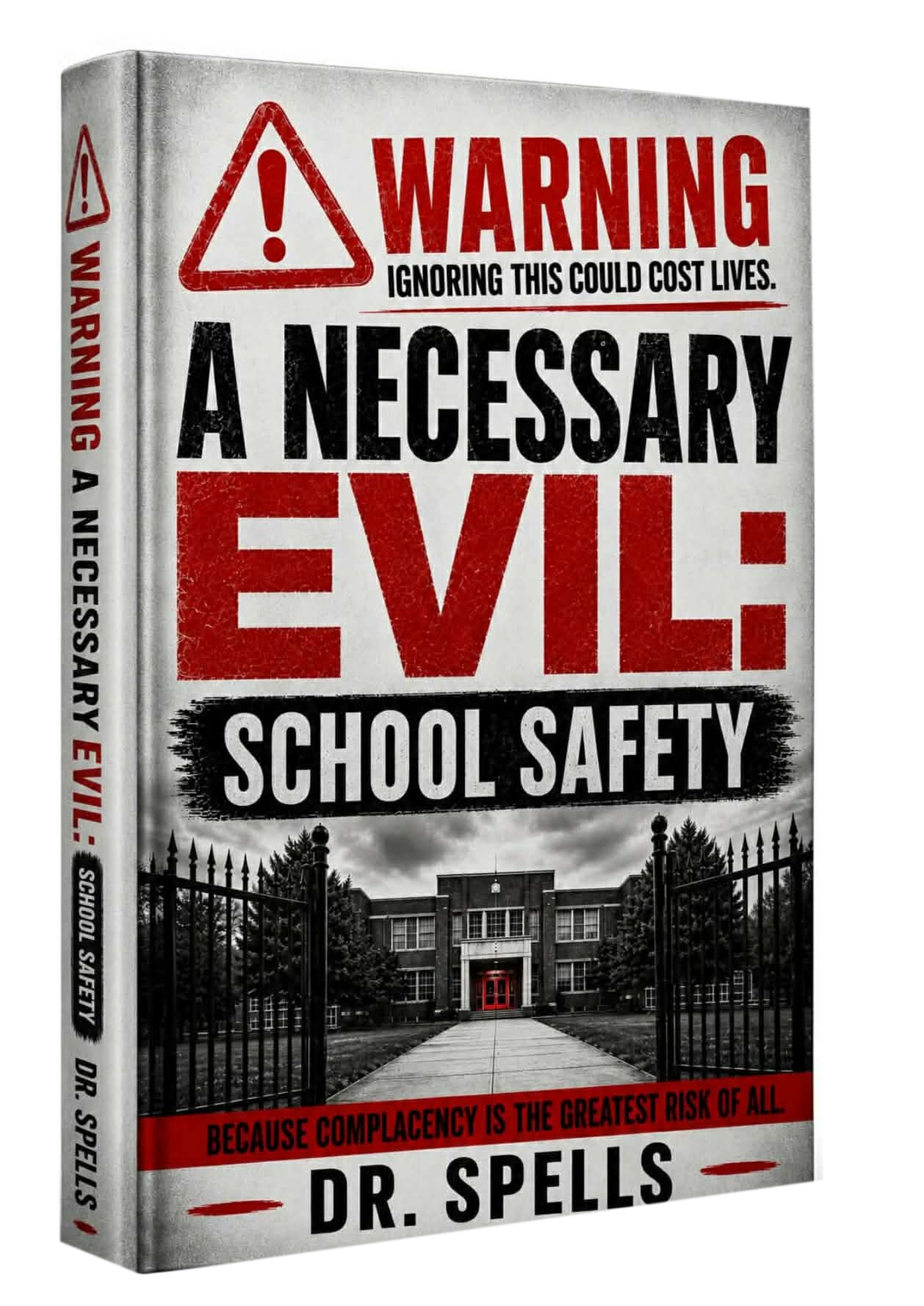
A closer look, not a generic score
An assessment is useful when leaders know something needs attention but need a fuller picture before deciding where to focus. A school may want to revisit its routines at the start of a year, understand how staff communicate around concerns, prepare for a change in leadership, or bring more consistency to the expectations that shape a calm day.
The work begins with context. What does the school want to understand? Who is closest to the issue? Which practices are already serving students well? Where do people report uncertainty, delay, or mixed messages? A thoughtful review makes room for those answers before a team chooses a response.
That matters because a safety concern can show up in different places. A reporting path may exist but not be widely understood. A procedure may be sound but hard to carry out when staffing changes or the pace increases. Students may notice changes adults have not seen, yet be unsure whether speaking up will lead to a helpful response. An assessment helps leaders connect those conditions rather than treat each one as a separate problem.
How the assessment moves
Define the question behind the review, the setting to examine, and what the school needs to understand more clearly. A focused purpose keeps the work grounded in the decision ahead.
Bring together the perspectives, routines, and communication patterns that shape the school day. The work pays attention to what people experience, not only what a written plan says should happen.
Translate what emerges into practical direction. The outcome may be a clearer priority, a leadership conversation, a training need, or a small number of changes people can carry responsibly.
Built around the school day
School safety is often discussed in the language of emergencies, but readiness is built long before an urgent event. It shows up when visitors enter the building, when a student has a concern, when staff members exchange important information, and when an adult notices that something has changed. Those moments are where a school can see whether its expectations are usable or simply well intentioned.
A practical assessment keeps those ordinary moments in view. It asks whether the right people can recognize a concern, whether they know where to take it, and whether the next person has enough context to respond well. It also looks at the habits that strengthen trust: consistent adult presence, clear boundaries, respectful communication, and follow-through that people can see.
The purpose is not to make a school feel watched or over-managed. It is to support an environment where students can learn, staff can act with confidence, and leadership teams can make decisions from a clearer understanding of the conditions around them.
That is why the assessment is not a generic score or a one-size-fits-all report. Each school and district carries its own history, people, physical setting, routines, and relationships. The work is shaped around the question that matters in that setting, then carried toward a next step that fits the people responsible for making it real.
A useful review also separates what needs immediate attention from what needs sustained work. Some findings may call for a clearer expectation or handoff right away. Others may point to a conversation that needs more time, a relationship that needs repair, or a larger decision about how the school supports students and staff. Naming that difference helps leaders respond with urgency where it belongs without turning every concern into a crisis.
The assessment can also help a leadership team decide what it should not try to solve all at once. When every concern becomes a priority, people can lose the ability to act well on any of them. A clearer picture lets the team protect the practices already working, focus on the few places that need ownership, and explain the reason for a change before asking staff or students to carry it.
From understanding to action
For a broader review of a live challenge, school safety consulting helps leadership teams apply that understanding to their context, priorities, and next decisions.
When the school needs a shared foundation across staff, students, or partners, school safety training can turn the findings into a people-centered conversation about readiness, trust, and responsibility.
Leaders can also explore the school safety audit guide for a practical look at organizing an internal review.
Frequently asked questions
A school safety assessment is a focused look at the routines, communication, roles, relationships, and conditions that shape readiness in a real school setting. It helps leaders see what is working, where confusion may be growing, and what deserves attention next.
No. Dr. Spells' assessment work is centered on people, culture, communication, and day-to-day readiness. It can inform a broader safety conversation, but it does not replace inspections, legal reviews, emergency-management requirements, or specialized security evaluations.
The right group depends on the question in front of the school. It may include district or building leaders, school safety teams, student-services staff, educators, operations staff, and trusted community partners.
The assessment is designed to give leaders a clearer starting point. Depending on what emerges, the next step may be a leadership working session, school safety consulting, staff training, or a small set of priorities the school can carry forward.
Start by sharing the setting, the people who need to be involved, and the question you want to understand more clearly. Dr. Spells can then recommend a scope that fits your school or district.
Start with a clearer picture
Share what your school or district wants to understand more clearly. Dr. Spells will help shape an assessment around the people, routines, and question in front of you.
Discuss a school safety assessment