Readiness that holds
Bring plans, roles, communication, and daily practice into better alignment, so people know what to do before pressure makes the next step harder.
 Start a conversation
 School safety consulting
Practical guidance for school and district leaders working through safety, culture, communication, and the decisions that shape a learning environment.
For the work in front of you
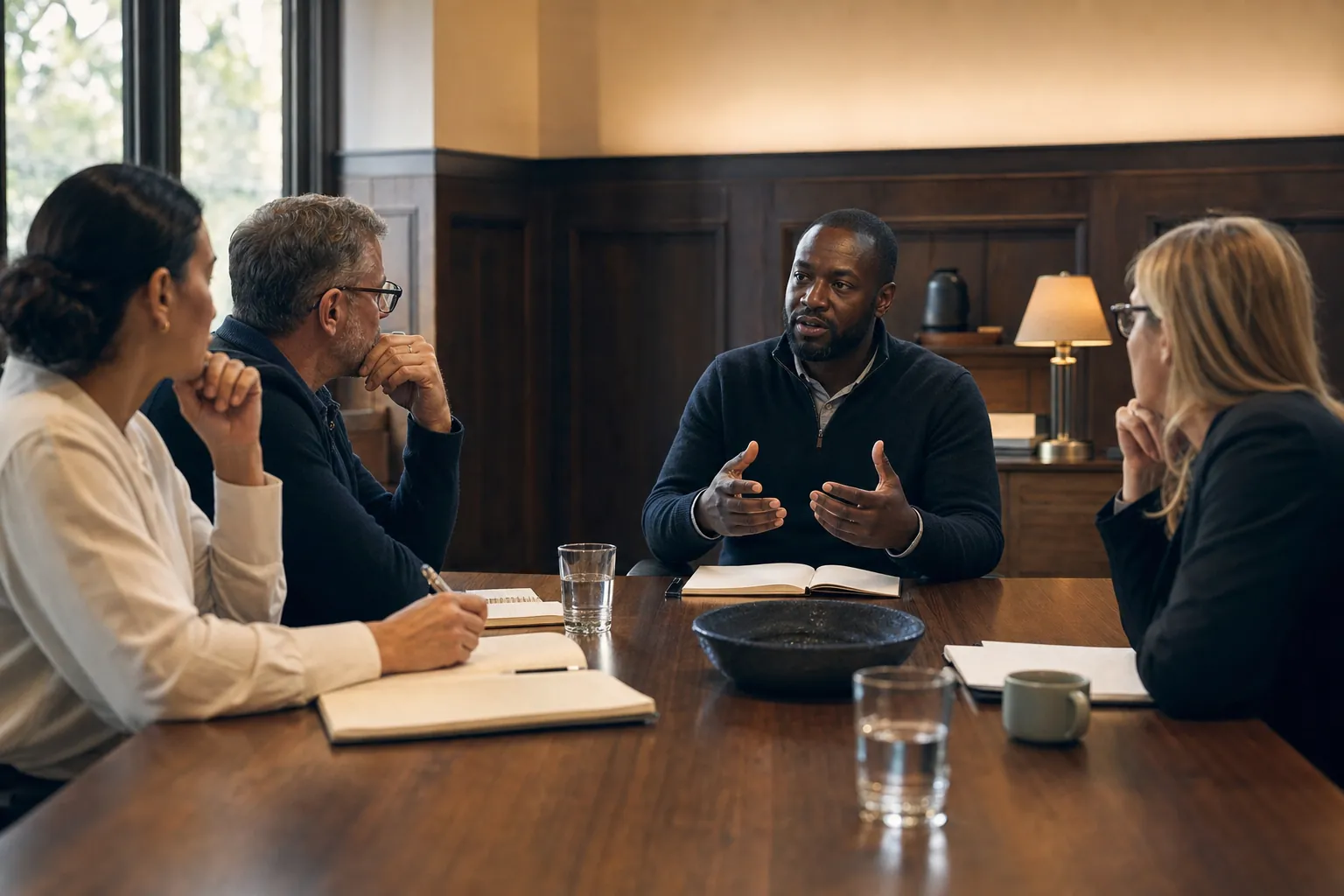
A concern about readiness may uncover a communication gap. A difficult incident may reveal that people are unclear about their roles. A new procedure may be sound on paper but disconnected from the pace and relationships of a real school day. When those questions are left to grow separately, a school can feel busy without becoming more prepared.
School safety consulting with Dr. Spells gives leaders a practical outside perspective on the challenge they are carrying. The work starts with the context that matters: the people involved, what has happened, what is already working, where trust has been strained, and what a responsible next step needs to accomplish.
Dr. Spells brings experience across education, public safety, policy, leadership, and community work. That range helps leaders examine a problem without reducing it to one meeting, one role, or one policy. The focus stays grounded in what the school community needs now and what will help the work hold over time.
What consulting can strengthen
Bring plans, roles, communication, and daily practice into better alignment, so people know what to do before pressure makes the next step harder.
Examine the conditions that help students and staff raise concerns early, and the habits that make follow-through credible when they do.
Help the people responsible for the next decision sort through competing priorities, communicate with steadiness, and move the work forward together.
A grounded way forward
Consulting is useful when leaders need more than a general framework. The school may be preparing for a new year, revisiting procedures after a concern, building a stronger relationship with public-safety partners, or trying to restore clarity after a difficult season. The circumstances differ, but the core work is often the same: understand what people are experiencing, name what is getting in the way, and build a next step that the community can actually carry.
That begins with honest attention to the everyday conditions around a problem. Are concerns moving to the right people? Do staff members understand when and how to act? Are students being heard? Does the plan match the physical setting and the rhythms of the school day? Where have past messages, assumptions, or handoffs created confusion? These questions make room for a response that is both practical and human.
The goal is not to impose a generic formula. It is to help the right people see the situation more clearly, decide what belongs in their next conversation, and establish the ownership required to follow through. That can mean a facilitated leadership session, a working conversation with partners, a review of readiness practices, or a broader engagement shaped around the issue at hand.
How the work moves
Clarify the people, history, current pressure, and purpose behind the request. A useful engagement begins with the real question, not a predetermined answer.
Make room for the roles, assumptions, communication patterns, and priorities that are shaping the situation, including the things a team may be avoiding.
Translate insight into action through a clearer message, stronger handoff, shared expectation, working session, or commitment that fits the school community.
Built for real conditions
School safety work can become fragmented when every concern is treated as a separate task. A plan lives in one place, student support in another, staff communication somewhere else, and community trust is expected to take care of itself. Consulting helps leaders connect those threads. It asks how the routines people rely on, the relationships students experience, and the decisions leaders make shape readiness together.
That approach does not treat preparedness and belonging as competing priorities. Students need adults who can set clear boundaries, notice concerns, act with confidence, and respond with care. Staff members need expectations they can understand and support they can use. Families and community partners need to know who is listening and how the school will follow through. A stronger safety culture makes room for all of that.
Because the work stays close to the actual setting, it can support individual schools, district teams, cross-functional groups, and conversations that include external partners. Dr. Spells helps participants move beyond broad agreement toward the decisions, responsibilities, and communication that make the next step more credible.
Early work often centers on a small set of practical questions. Which concerns require a clearer reporting path? Where might a staff member be unsure of their responsibility? What needs to be communicated before a new routine is introduced? Which voices have not yet been included in the conversation? The answers give a team a more useful place to begin than a long list of changes that cannot all happen at once.
There is also value in naming what should remain steady. Schools do not need to discard every current practice because one part of the system needs attention. Consulting can help leaders identify the routines that are serving students well, protect the relationships worth strengthening, and focus energy where a clearer expectation or stronger handoff will make the greatest difference.
That discipline matters when the pressure to act is high. A responsible response should be timely, but it should also be understandable to the people expected to carry it out. By connecting urgency to purpose, ownership, and communication, the work helps a school move with care instead of simply moving fast.
Choose the right format
When a school or district needs a shared starting point, school safety training can give a larger group practical perspective and common language. Consulting is the right next step when leaders need to apply that conversation to a live question, a particular group, or a specific set of decisions.
When leaders need a practical view of how readiness is showing up across routines, communication, and the school day, a school safety assessment can create a clearer picture before deciding what support or change is needed.
For leaders who need individual or small-team support around responsibility, trust, and difficult decisions, leadership coaching for educators offers another focused path. The right format depends on who needs to be in the room and what the next responsible move requires.
Frequently asked questions
This work is for school and district leaders, safety teams, student-services professionals, and community partners who need focused support around a real safety, culture, communication, or readiness challenge.
Training is designed to give a group shared perspective and practical language. Consulting goes deeper into the situation in front of your organization, helping the people responsible for the next steps work through context, priorities, and a responsible path forward.
Yes. A difficult incident can expose questions about communication, trust, roles, and response. Dr. Spells can help leaders create the space to understand what needs attention and decide how to move forward with care and accountability.
No. Emergency planning can be part of the work, but school safety also lives in daily routines, student connection, leadership decisions, staff communication, and the culture people experience before an urgent moment arrives.
Start by sharing the situation, who is involved, what has already happened, and what needs to become clearer. Dr. Spells can then recommend a conversation, working session, or broader engagement that fits your school or district.
Start with the real situation
Share what your school, district, or leadership team is navigating. Dr. Spells will help shape the conversation around the people responsible for the next step.
Discuss school safety consulting