Clear reporting pathways
Help adults recognize what belongs in an immediate emergency response, what needs prompt team review, and how a concern reaches the right people without delay or confusion.
 Start a conversation
School threat assessment training
Practical, people-centered preparation for school teams who need clearer roles, steadier communication, and responsible follow-through when a concern needs attention.
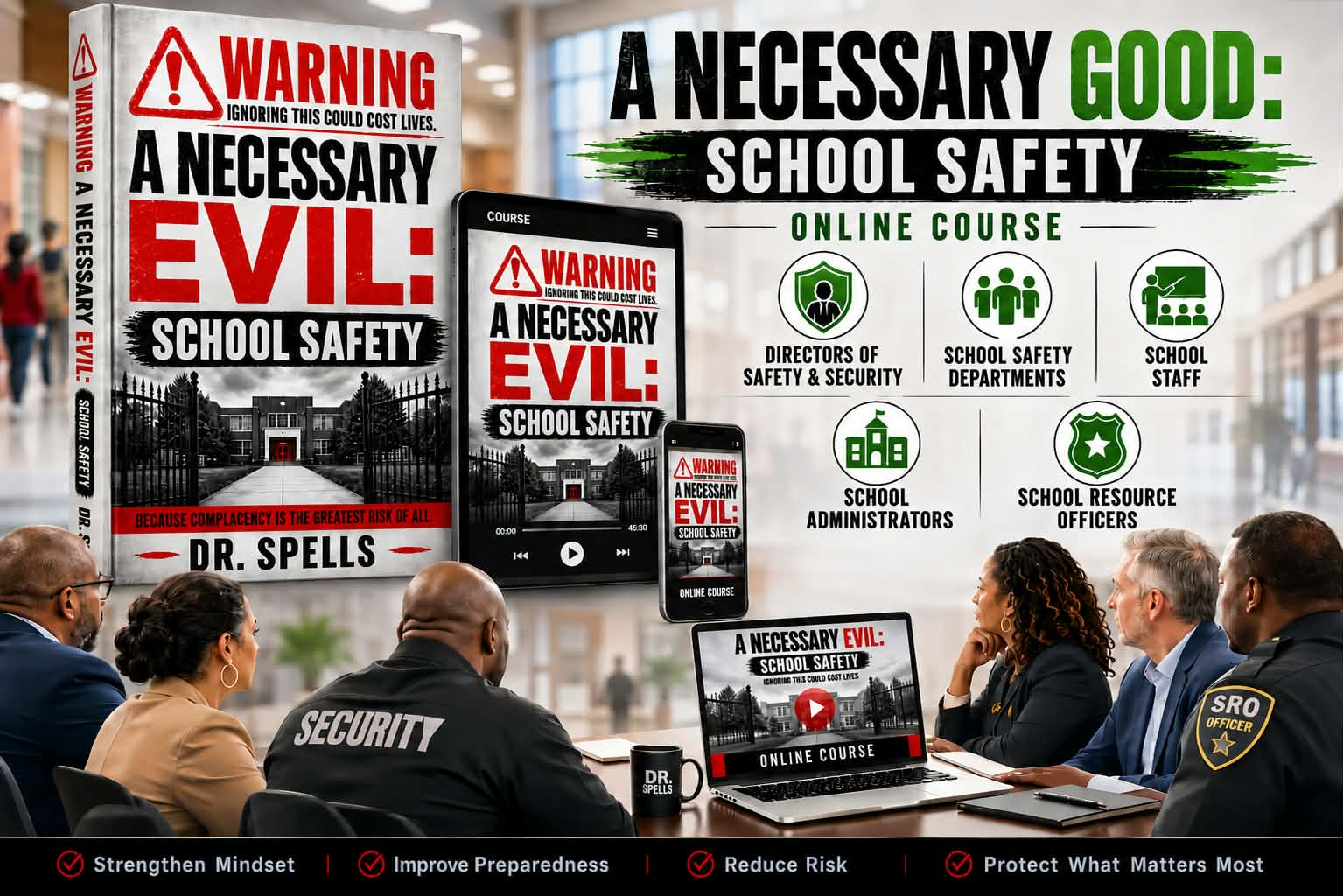
Before a concern tests the team
School threat assessment training gives a team time to prepare for a serious responsibility before pressure, incomplete information, and fear make every decision harder. When a student, staff member, family, or partner raises a concern, people need a clear way to recognize what they are seeing, move the information responsibly, and bring the right people together.
The aim is not to turn every concern into a crisis or to treat students as problems to be managed. It is to help a school respond with care, proportionality, and clarity. That requires adults who understand their role, respect the limits of that role, and know how their next action connects to the work of the wider team.
Dr. Spells brings experience across education, public safety, leadership, policy, and community work to this conversation. The training keeps the work grounded in school life: protecting learning, supporting students, communicating with families, honoring established procedures, and making decisions that can stand up to scrutiny and care.
What a prepared team needs
Help adults recognize what belongs in an immediate emergency response, what needs prompt team review, and how a concern reaches the right people without delay or confusion.
Strengthen the shared language, roles, handoffs, and judgment a multidisciplinary team needs before a difficult concern arrives.
Connect assessment decisions to proportionate support, communication, documentation, and review so a concern does not disappear after the first meeting.
Training for the moments in between
Threat assessment work often begins before a formal meeting. A teacher may notice a meaningful change. A student may share something that is difficult to interpret. A parent may raise a concern. An administrator may receive information that feels incomplete but cannot be ignored. Training helps adults distinguish between observation, assumption, rumor, immediate danger, and a concern that needs prompt review through the school's established process.
That distinction matters. Adults need to know when emergency procedures apply and when a multidisciplinary team needs room to gather facts, consider context, and plan proportionate next steps. They also need to know that they are not expected to diagnose, investigate alone, or promise outcomes they cannot deliver. Clear boundaries help people move a concern without panic, delay, or unnecessary escalation.
Dr. Spells helps teams examine the handoffs that can either strengthen or weaken a response. Who receives a concern first? How does it reach the people responsible for review? What information should be shared, documented, or protected? Where do education, student support, safety, family communication, and local partners need to coordinate? The right answers depend on the school, but the need for known roles and steady communication does not.
A conversation built around your setting
Name the people who participate in the school's process, the decisions they carry, and the questions they need to answer together before a real concern arrives.
Explore how an observation or report should move through the school, where communication can stall, and how adults can raise concerns without guessing their way through the next step.
Consider how a school's established process can hold both immediate safety needs and the support, follow-up, and accountable review that help a student and community move forward.
What the work can help clarify
A trained team does not assume that every adult must solve a difficult concern alone. It creates shared expectations for what staff can notice, what they should report, and how the school will respond. That helps educators return to the classroom with clearer boundaries, helps leaders coordinate rather than improvise, and gives student-support professionals the context they need to do their part well.
The work also makes room for the human side of communication. A student may need to know that an adult listened and acted responsibly. Families may need appropriate reassurance without being given information the school cannot share. Staff may need a common language that is calm, precise, and free from labels that can cause harm. Teams can prepare for those conversations before a live situation puts trust at risk.
Training does not replace the policies, protocols, or qualified professionals your school already relies on. It helps the people carrying those responsibilities see how the parts connect in practice. A school can have written procedures and still discover that new staff do not know a reporting path, that backup roles are unclear, or that teams need a better way to talk through a concern together. Those are training opportunities, not failures to hide.
For schools and districts, this is a chance to make readiness more durable. Instead of relying on a single expert or the memory of a past incident, the team builds a shared foundation for responsible action. The result is not a guarantee that every situation will be simple. It is a stronger capacity to recognize what matters, convene the right people, and respond in a way that protects both safety and dignity.
A useful time to convene
Related support
For a broader conversation on everyday readiness, relationships, and shared responsibility, explore school safety training with Dr. Spells.
When leaders need a closer look at routines, communication, and the conditions that shape preparedness, a school safety assessment can identify what deserves attention next.
For practical background on preparing a school team, read the school threat assessment training guide.
Frequently asked questions
School threat assessment training can serve district and school leaders, administrators, counselors, psychologists, social workers, educators, school resource officers, safety personnel, and other partners with a real role in the school's established process.
No. Dr. Spells' training strengthens how people understand and carry out their roles within the school's adopted process. It does not replace local policy, legal counsel, clinical judgment, emergency procedures, or specialized threat-assessment protocols.
Yes. The conversation can be shaped around the participants, the age groups served, the questions your team is facing, and the point in your readiness work where clearer shared understanding would help most.
No. A responsible process considers behavior, context, safety, support, and the practical steps needed to reduce risk. Training should help adults avoid reducing a student to a label or treating one department as the sole owner of a shared responsibility.
A session may lead to a tabletop discussion, a review of team roles and reporting pathways, school safety consulting, or a broader assessment of routines and communication. The appropriate next step depends on what your school learns in the room.
Start with your team
Share what your school or district is preparing for. Dr. Spells will help shape a training conversation around your people, responsibilities, and current questions.
Discuss threat assessment training