
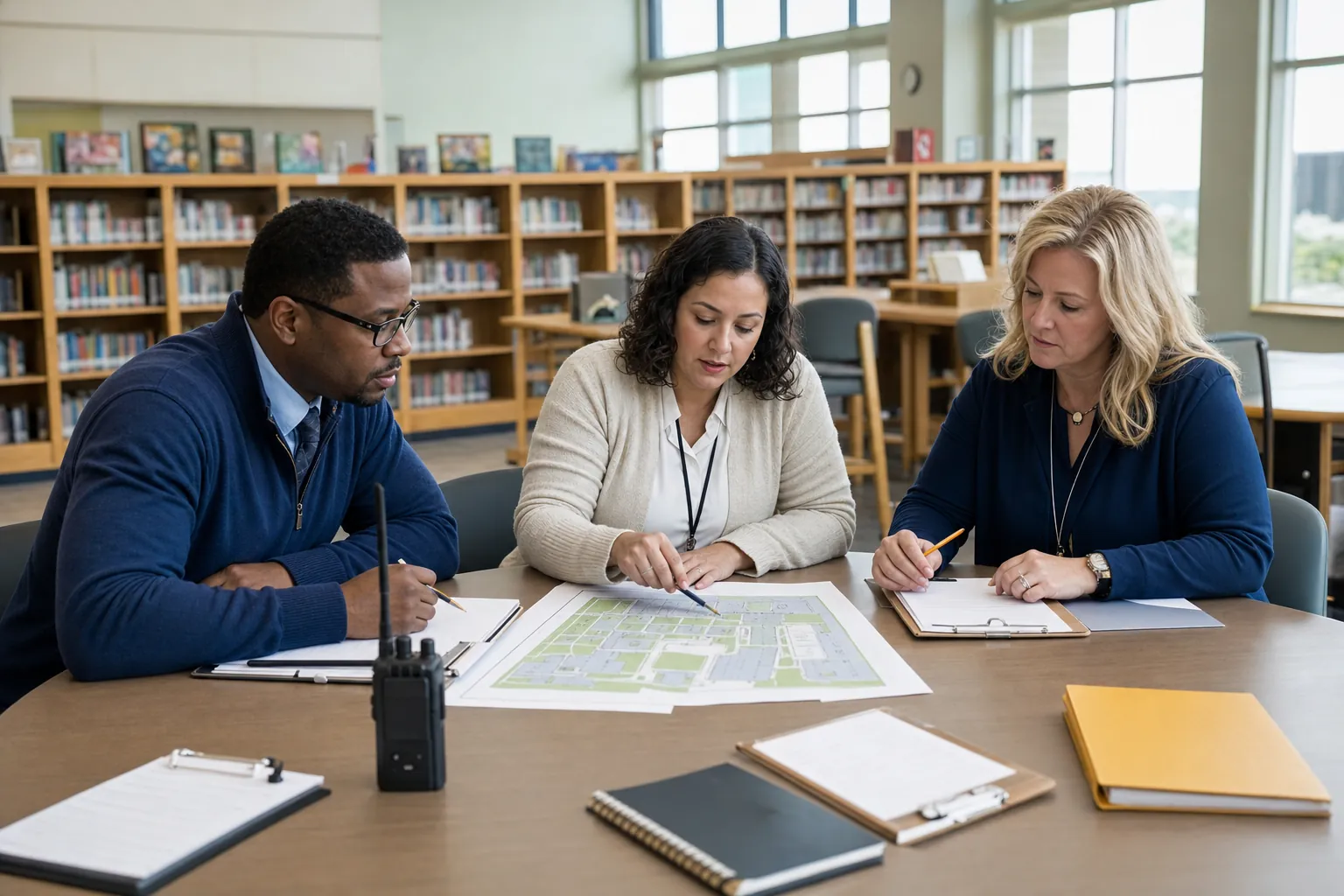
A school safety checklist should not be a list of things to buy or a form to complete once a year. Its real job is to help a school notice whether the people, routines, and relationships that protect learning are ready to work when they are needed.
Every campus has different risks, routines, people, and local requirements. That is why a good checklist does not promise one universal answer. It gives a leadership team a disciplined way to look at the ordinary school day, ask where confusion can build, and assign a practical next step before a hard moment exposes the gap.
Use this guide alongside your district's formal emergency operations plan and local direction. It is built for the leadership meeting, campus walkthrough, tabletop conversation, or annual review where the goal is not perfection. The goal is steady improvement people can feel in the way the school operates.
Start with people and clear ownership
The most sophisticated plan will fail if people do not know who owns the next decision. Begin the checklist with the team itself. Include school and district leaders, teachers, support staff, facilities and transportation teams, counselors, and local partners who have a real role in the work. Students and families can also reveal blind spots, especially around arrival, dismissal, reporting concerns, and how messages are received.
Ask: Is there a current planning group? Does each part of the work have an owner and a backup? Can staff explain how they raise a concern and who decides what happens next? Are substitutes, new staff members, and after-school teams included in the routine, or does the system depend on one person remembering every detail?
The U.S. Department of Education's school emergency planning guidance begins with collaboration because the people who carry out a plan see problems that a document can miss. A smaller active group with clear responsibility is more useful than a large committee that meets once and disappears.
Walk through the ordinary school day
School safety becomes real in transitions. Arrival, passing periods, lunch, recess, dismissal, athletic events, transportation changes, and after-school programs all involve handoffs between people and places. A checklist is most useful when it follows those moments instead of starting with a generic list of threats.
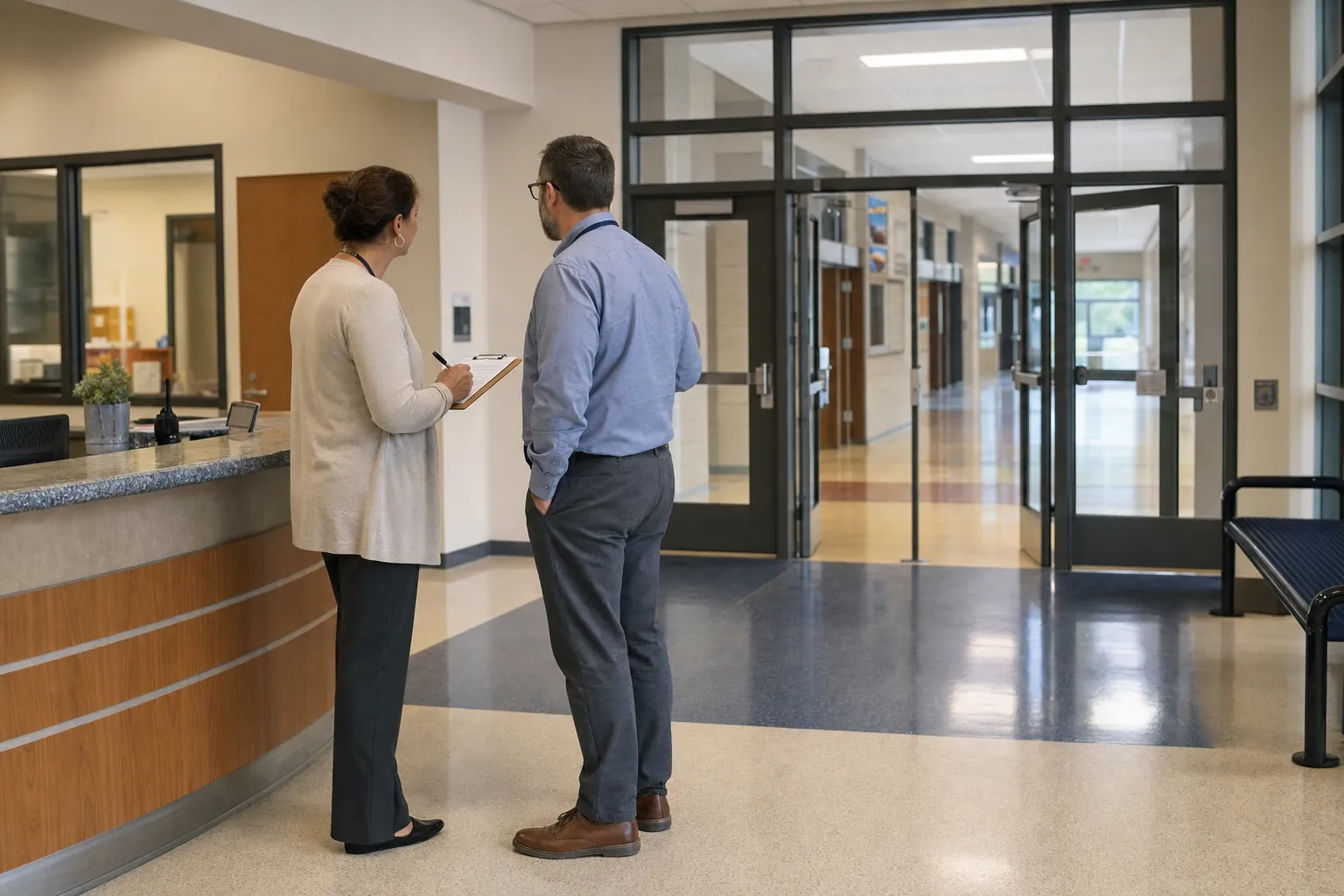
Ask: Where do visitors enter and who greets them? Which areas become hard to supervise at busy times? How does a substitute learn the day's procedures? What happens when a family member arrives during dismissal, a bus is late, or an activity runs beyond the normal schedule? Are staff able to get help quickly without disrupting the learning environment?
Walk the campus with the people who experience it. A principal, front-office team member, bus driver, paraprofessional, and student may each see a different part of the same routine. The aim is not to find fault. It is to identify where a clearer handoff, a visible adult, or a reliable backup would make the day safer and calmer.
Review access, supervision, and reporting
Physical measures work best when they support thoughtful routines. A locked door does not help much if visitors are unsure where to go. A camera does not replace a visible adult who knows the community. A reporting process does not build trust if people do not know how to use it or doubt that anyone will respond.
Ask: Are entry points maintained and consistently used? Do adults know the visitor process and how to respond when something feels off? Are high-traffic locations actively supervised? Is there a clear, respectful way for students, families, and staff to report a concern? Do people understand what kind of response they can expect?
For a deeper review of the daily protections that make these routines work, use the companion guide to school safety measures. It helps teams think beyond equipment and toward the habits that make a campus more predictable for students, staff, and families.
Pay special attention to the moments when a routine changes. A front office may have a strong process at the start of the day but a less clear one during an evening event. A school may have a visitor system that works for the main entrance but not for a delivery, shared facility, or late-arriving family. These are not unusual exceptions. They are the normal conditions a reliable procedure must be able to handle.
Reporting also needs a response loop. When a student, staff member, or family raises a concern, the school should be able to acknowledge it, decide who will follow up, and communicate the appropriate next step. People do not need every detail. They do need to see that the process is real. Consistent follow-through turns a reporting channel from a promise into a source of trust.
Test whether communication works in practice
Under pressure, people should not have to search for the right person or translate vague instructions. The checklist should examine how information moves before, during, and after a disruption. That includes who leads a decision, who communicates with families, how people are accounted for, and which messages are appropriate for staff, students, community partners, and the wider public.
Ask: Are contact lists current? Are radios, alerting tools, and backup channels tested? Do people know what information they are responsible for sharing? Can a new staff member find the basics quickly? Have family messages been drafted in clear language before urgency makes communication harder?
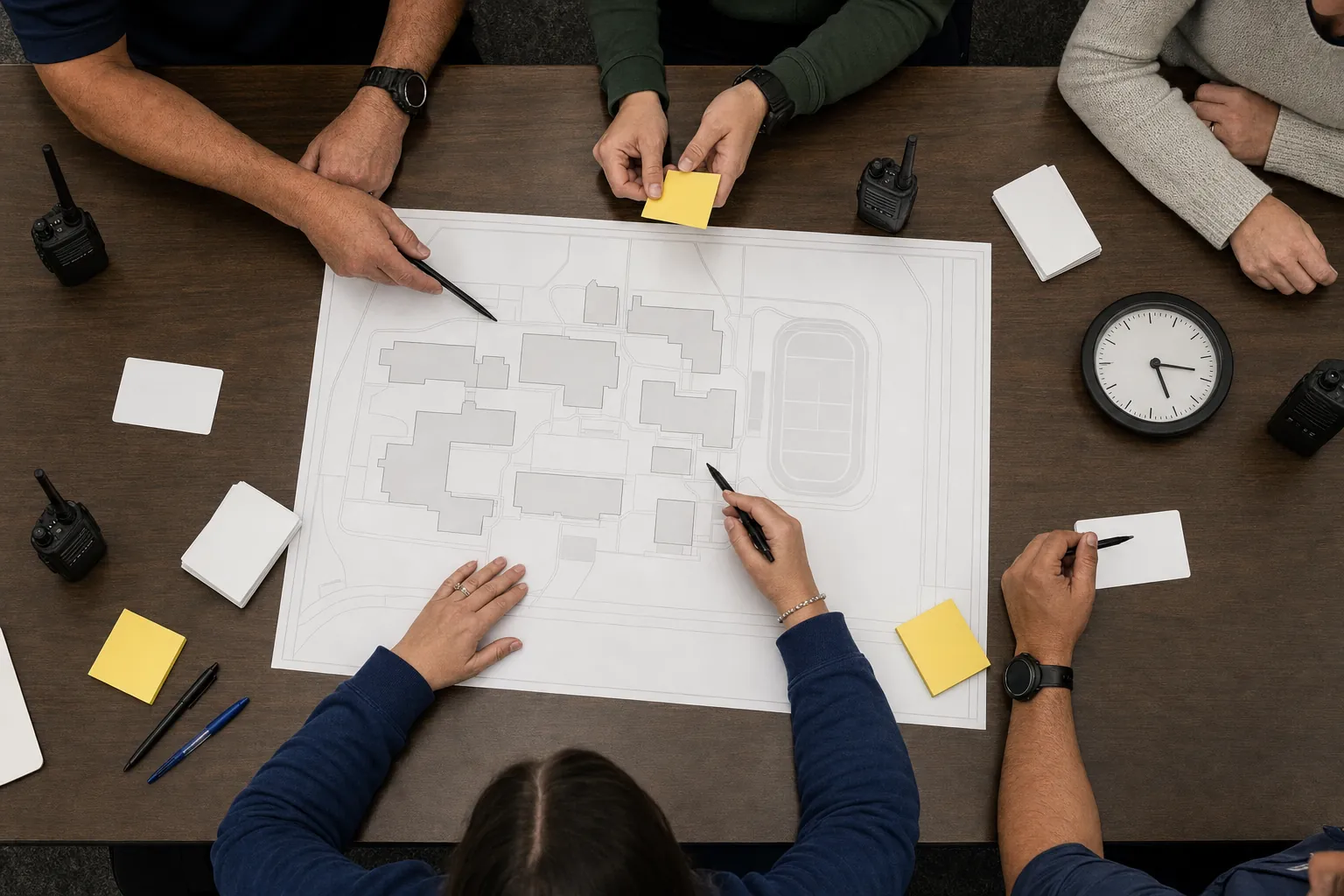
Short tabletop conversations are often enough to uncover an issue. Put the people with real roles around a table, walk through a likely decision, and listen for where authority, information, or support gets stuck. A plan becomes more dependable when teams practice the conversations they will need to have.
Communication should be designed for the person receiving it, not only the person sending it. A staff message may need an immediate action and a clear location. A family message may need plain language, a known update channel, and a reminder not to come to campus unless directed. Community partners may need a point of contact and an understanding of how the school will coordinate with them. One message rarely serves every audience equally well.
When the team tests a communication routine, look for more than whether a message was sent. Ask whether it arrived in time, was understood, and helped people make the right next decision. A message that reaches everyone but creates five new questions has not solved the communication problem.
Keep student connection on the checklist
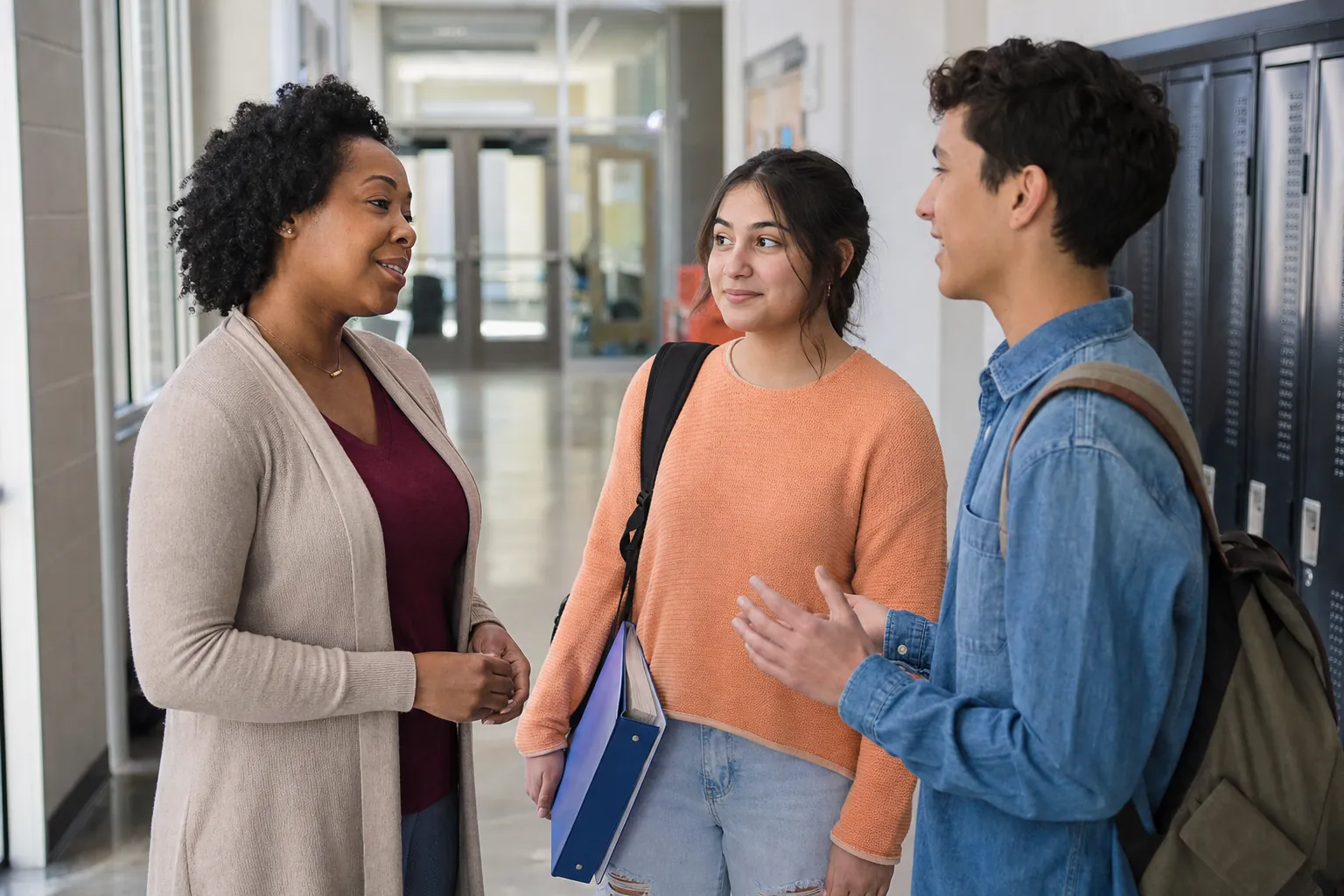
A safe school is not only a place with clear procedures. It is a place where students know who will listen, adults follow through, and concerns can surface early. The Centers for Disease Control and Prevention describes school connectedness as students' belief that adults and peers care about their learning and about them as individuals.
Ask: Can students name a trusted adult? Do they know where to go with a concern? Are reporting pathways accessible to students with different communication needs? Do adults use consistent, respectful expectations? When someone raises a concern, does the school close the loop in a way that builds confidence?
Connection is not separate from readiness. It helps adults notice changes, gives students a reason to speak up, and makes difficult conversations more likely to happen before a situation grows. Clear systems and trusted relationships reinforce one another.
Practice, learn, and make one change
A drill is not evidence of readiness simply because it happened. Practice should help the school learn. Before an exercise, make the purpose clear, choose an age-appropriate scenario, and decide what feedback the team wants to collect. Afterward, ask what people understood, where they hesitated, and what should change before the next practice.
Ask: Did staff receive the information they needed? Could someone new to the building follow the routine? Were students accounted for in a practical, respectful way? Did the procedure work for people with disabilities, language needs, or different transportation arrangements? What one improvement can the team make now?
Keep practice calm and specific. The goal is readiness, not fear. A short debrief that produces one visible improvement is more valuable than a dramatic exercise that leaves people uncertain about what was learned.
Include the people whose experience may be easiest to overlook. Consider how a procedure works for a student who uses mobility equipment, a family that relies on translation, an adult who joins the campus midyear, or a student whose anxiety makes an unexpected drill especially difficult. A routine is not ready merely because it works in the easiest version of the day. It needs enough flexibility and support to protect the people who may need the most clarity.
Document the improvement in a simple format: what the team saw, what will change, who owns it, and when it will be checked. That record helps new leaders understand the reasoning behind a procedure and keeps the same unresolved issues from returning every year.
Use a simple scorecard for follow-through
A checklist is only useful when it leads to a decision. After a walkthrough, drill, or review meeting, choose one or two priorities, assign an owner, and agree on a date to check progress. That is how a safety plan becomes a living practice instead of a document that grows longer every year.
- Clarity: Can people explain their role and the next step?
- Reliability: Do communication tools, contact lists, doors, and routines work when tested?
- Coverage: Are busy places and times actively supervised?
- Access: Can every person follow the plan with dignity?
- Trust: Do people know how to raise a concern and believe someone will respond?
- Recovery: Is there a plan to support people and return to learning after disruption?
Keep the scorecard honest by using evidence from the work itself. A review can draw on a walkthrough, a drill debrief, staff feedback, a family question that exposed uncertainty, or a simple test of a radio and contact list. The point is not to grade the school. It is to turn a broad concern into a specific action that someone can complete.
For the fuller structure behind this review, read How to Build a School Safety Plan That Works. It walks through the planning process from assembling the team through regular review, while this checklist helps leaders see what needs attention in the day-to-day work.
How Dr. Spells helps schools turn review into readiness
Dr. Spells brings experience in education, public safety, law, and policy to conversations that need candor, care, and practical follow-through. His school safety training helps leaders and staff build shared responsibility without treating safety as separate from learning.
Teams that need a focused leadership conversation can also explore coaching and consulting support. For a practical foundation that can travel beyond the meeting room, A Necessary Evil: School Safety is available as a book, course, and learning experience. When it is time to discuss the people and setting you serve, start a booking inquiry.
Frequently Asked Questions
Questions leaders ask when reviewing school safety.
What should be on a school safety checklist?
A useful school safety checklist covers the people responsible for decisions, everyday entry and supervision routines, communication, reporting pathways, student support, practice, accessibility, and the way the school will review what it learns. It should help a team identify the next practical improvement, not create a longer binder.
How often should a school use its safety checklist?
Use it during the annual plan review and return to it after a drill, incident, major event, building change, staffing shift, or new local guidance. A shorter version can also support regular walkthroughs of arrival, dismissal, visitor entry, after-school activities, and other high-traffic routines.
Who should complete a school safety checklist?
The review should include leaders, educators, support staff, facilities and transportation teams, counselors, and local partners who have a real role in the work. Students and families can also offer valuable perspective on routines, reporting concerns, and communication when their involvement is appropriate.
Is a school safety checklist the same as an emergency operations plan?
No. An emergency operations plan sets out the school or district's formal procedures and responsibilities. A checklist is a practical way to review whether the daily conditions that support the plan are clear, working, and understood by the people who need to carry them out.
Related reading
Keep the work moving.
School Safety Measures That Protect Learning, Too
A practical framework for choosing, testing, and improving school safety measures without losing sight of the people they serve.
Read the guide
How to Build a School Safety Plan That Works
A step-by-step guide for school leaders building a safety plan people can understand, practice, and improve.
Read the guide
How to Conduct a School Safety Audit
A practical school safety audit process for reviewing routines, spaces, communication, and follow-through.
Read the guide