
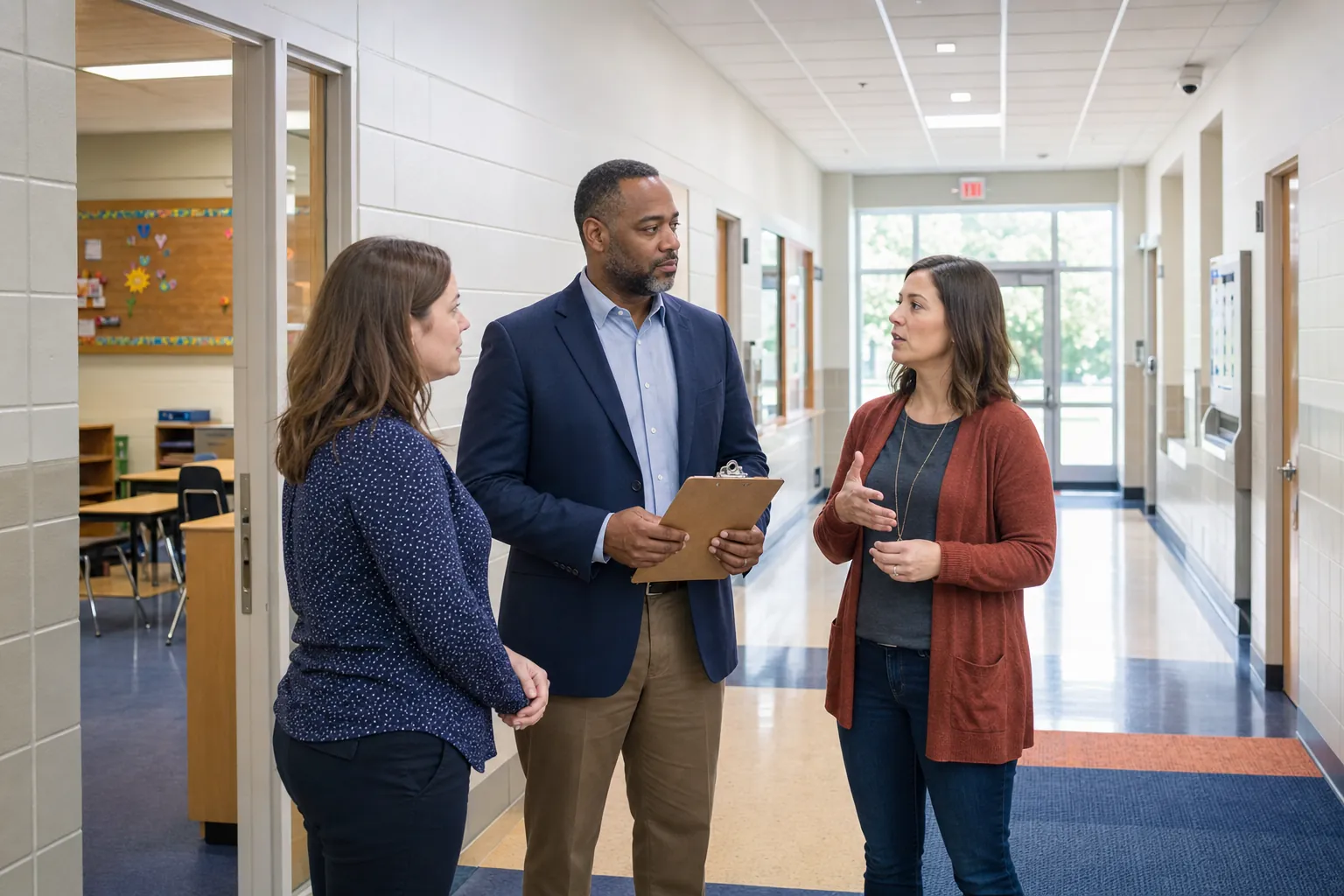
A school safety drill should help people recognize a familiar routine, communicate clearly, and make the next responsible decision. It should not leave students, families, or staff wondering what just happened or why.
That is an important distinction. Schools need practice because an emergency operations plan is only useful when people can carry out the essentials under pressure. But practice can become counterproductive when the purpose is unclear, the experience is needlessly intense, or nobody takes time to learn from it. Real readiness is calm, specific, and built around the people who will have to use the routine.
This guide helps school and district leaders plan safety drills that strengthen everyday preparedness while protecting trust and learning. Use it alongside local requirements, district policy, and the school’s formal emergency operations plan. It is not a substitute for either.
What school safety drills should cover
Safety drills for schools work best when they test a routine people can actually carry out, not just whether an announcement was made on time. Before placing a drill on the calendar, leaders should be able to name the purpose, the people involved, the communication that will be tested, the support some students or staff may need, and the one improvement the team will look for afterward.
- Purpose: one clear decision, action, or handoff the practice is meant to test.
- Roles: who leads, who supports, and who steps in if the usual person is unavailable.
- Communication: the instruction people will receive, how they confirm it, and what happens if a usual channel fails.
- Inclusion: the practical supports that help students, staff, visitors, and substitutes follow the routine with dignity.
- Follow-through: a brief debrief, an owner for the next improvement, and a date to test it.
That shared foundation gives a drill a useful job to do. It also makes it easier to choose the right level of practice, from a tabletop discussion to a full-building exercise, without creating more disruption than the learning goal requires.
Start with what the drill needs to teach
Every drill needs one clear job. A fire evacuation practice may test whether people know the route, accountability process, and backup exit. A severe-weather practice may test where groups move, how staff receive updates, and what support a student needs to follow the routine. A communication tabletop may test who sends a message, who confirms it was received, and where families can expect an update.
The U.S. Department of Education’s current emergency planning guidance calls for training, exercises, and age-appropriate drills that reflect school-specific needs. That makes the planning question straightforward: what will this practice help people do better in this school, with these students, in these spaces?
A broad aim such as “improve readiness” is too vague to evaluate. Instead, name the one or two decisions the group should be able to make. Examples include:
- Move to the correct location using a route that works for the people present.
- Account for students and staff without relying on memory or one person’s phone.
- Communicate a clear instruction through the tools the school actually uses.
- Recognize who needs support and how adults should ask for it.
- Identify one point where a handoff could fail during a busy school day.
Clear learning goals prevent a drill from becoming a performance. They also make the debrief more useful because the team knows what evidence to look for.
Choose the lightest practice that can answer the question
Not every concern requires a full-building event. A conversation, walkthrough, tabletop discussion, or small team practice can reveal a surprising amount before a larger drill is necessary. The best format is the least disruptive one that lets the school test the decision at hand honestly.
For example, a front-office team can walk through a visitor or early-dismissal scenario without involving the entire school. Leaders can test family communication by drafting and reviewing a message together. A facilities team can walk an alternate route during a quiet period. A classroom teacher can review a routine with students using calm, familiar language. These focused practices build confidence without asking people to carry more intensity than the goal requires.
When a full drill is appropriate, build it from the school’s normal routines. Think through arrival, transitions, lunch, dismissal, after-school programs, transportation, and shared spaces. The companion guide to conducting a school safety audit can help a team spot the real handoffs and exceptions that deserve practice before a drill is placed on the calendar.

Prepare people before the practice begins
People follow routines better when they understand the purpose. Before a drill, give staff the information they need to support students and one another. Explain the goal, the expected sequence, the communication method, who leads, who is the backup, and what should happen if the ordinary routine cannot be followed exactly.
Students and families also deserve clear, age-appropriate communication. Young students do not need a detailed adult explanation to understand where to go, whom to stay with, and how adults will help. Older students may benefit from more context and a chance to ask practical questions. Families need to know the school is practicing readiness, not creating an alarming event without explanation.
Plan for the people who may need an added layer of support. That can include students with mobility, sensory, communication, medical, or anxiety-related needs; students who are new to the school; staff members who are substitutes or work outside the normal day; and families who need information in another language. A procedure that works only for the easiest version of the day is not ready yet.
Build those supports into the routine before the practice. Decide who checks in, what alternative route or space is available, how instructions will be communicated, and how privacy and dignity will be protected. The goal is not to single anyone out. It is to make sure the school has a dependable way to include everyone.
Practice communication, not only movement
A drill can look orderly while communication is still weak. People may move where they are expected to go, but not know who confirms attendance, who relays a change, who communicates with families, or what happens when the first channel does not work. Those gaps often become visible only when someone asks a simple question: “What happens next?”
Use a drill to test the small details. Can adults hear the instruction? Do they understand it? Can they reach a backup person? Is the message consistent across classrooms, offices, transportation, and after-school teams? Does the school have a calm, plain-language family message ready for the kind of event being practiced? A message that is sent quickly but produces confusion has not done its job.
The school safety plan guide offers a broader framework for setting decision roles and communication expectations. During a drill, choose one part of that system to test, then capture the questions it surfaces. Small fixes, such as an updated contact list, a clearer radio protocol, or a defined backup, can make a routine much more reliable.
Keep readiness connected to trust
School safety practice should not ask students to feel frightened in order to prove adults are serious. The tone matters. Calm instructions, predictable routines, thoughtful preparation, and a respectful debrief help students understand that adults are working to protect them.
This is also where student connection belongs in the conversation. The Centers for Disease Control and Prevention defines school connectedness as students feeling that adults and peers care about them and about their learning. A safety routine supports that connection when adults explain what is happening, respond to distress appropriately, and show that questions and concerns will be taken seriously.
Use the same care with staff. A teacher cannot confidently support students through a drill if the process arrives as a surprise or the expectations are unclear. Invite feedback from people who carry out the routine, especially front-office staff, paraprofessionals, transportation teams, counselors, facilities teams, and after-school leaders. Their experience often reveals the difference between a procedure that sounds good and one that can hold up on a real day.

Build in the accommodations that make practice real
Accessibility is not an extra item to consider after a drill is designed. It is part of whether the plan works. A school needs to understand how a student who uses mobility equipment moves through the space, how a student with sensory needs receives an alert, how instructions reach a student who communicates differently, and how adults support someone who is overwhelmed by an unexpected change.
Ask the people closest to those needs what would help. A counselor, special educator, nurse, classroom teacher, family member, or student may see an issue that a generic plan cannot. Then document the adjustment in a practical place where the adults responsible can find it. The point is not to write a separate plan for every person. It is to make inclusive preparation part of the school’s normal planning discipline.
This same standard applies to staffing. Consider substitutes, visitors, evening-event staff, contracted workers, and community partners. Who gives them the essential information? What is the simplest way to identify their role? Where do they go if the usual contact person is not available? The school safety checklist offers useful questions for reviewing those day-to-day details.
Debrief while the details are still fresh
The most valuable part of a drill starts after people return to the next part of the day. Set aside a short, structured debrief for the adults who observed or carried out the routine. Ask what was clear, what created hesitation, what information arrived too late, which support was needed, and what should change before the next practice.
Keep the discussion factual and respectful. Rather than saying that a drill “went badly,” identify the observable issue: a classroom could not hear the message, a substitute did not know the assembly location, an accommodation was not available, a radio channel was unclear, or a family update had no owner. Specific observations lead to practical corrections.
Then choose one or two changes. Name the person responsible, the support they need, and the date the team will test the improvement. A drill that produces a current roster, a better backup route, a revised staff script, or a clearer handoff has created real value. A drill that ends with “we completed it” has not yet finished the job.

Use the calendar to build confidence over time
Safety practice works best as a cycle, not a series of disconnected events. Start with the school’s requirements and emergency operations plan, then map the practices that genuinely support the people, spaces, and routines in front of you. Mix broader drills with small team walkthroughs, communication checks, and review conversations so the work stays useful throughout the year.
Review the schedule after a building change, staffing shift, significant incident, or recurring point of confusion. Keep a simple record of what was practiced, what the school learned, and what changed. That record helps new staff understand the routine and gives leaders a clear starting point for the next review.
How Dr. Spells helps schools practice with purpose
Dr. Spells brings experience across education, public safety, law, and policy to conversations that require both clear thinking and care for the people involved. His school safety training can help leaders and staff build a shared understanding of readiness, communication, connection, and follow-through.
When a school or district needs to work through a live readiness challenge, school safety consulting provides a closer look at the setting, the people involved, and the next responsible move. For a focused review of current routines, leaders can also explore a school safety assessment. To begin a conversation shaped around your school or district, start a booking inquiry.
Frequently asked questions
Questions leaders ask when planning drills.
How often should schools conduct safety drills?
The right schedule depends on local requirements, the age of students, the type of practice, and the school’s current needs. Build the calendar around a clear purpose, then use short refreshers and review points so the routine stays familiar without becoming disruptive or performative.
What should a school safety drill include?
A useful drill has a specific purpose, clear roles, age-appropriate instructions, a plan for communication and accountability, accommodations for people who need them, and time to learn from what happened. The debrief and follow-through matter as much as the practice itself.
How can schools make drills less stressful for students?
Tell people the purpose in advance when that is appropriate, use calm and plain language, avoid unnecessary sensory intensity or realism, prepare adults to support students who may be distressed, and give everyone a clear way to ask questions afterward. Readiness does not require fear.
What should happen after a school safety drill?
Gather brief feedback from the people who carried out the routine, name what was clear and what was not, choose one or two practical improvements, assign an owner, and set a date to check progress. A drill should lead to a stronger next practice, not simply a completed calendar item.
Related reading
Keep the work moving.
School Safety Measures That Protect Learning, Too
A practical framework for choosing, testing, and improving school safety measures without losing sight of the people they serve.
Read the guide
How to Build a School Safety Plan That Works
A step-by-step guide for school leaders building a safety plan people can understand, practice, and improve.
Read the guide
A School Safety Checklist for the Work That Matters
A practical school safety checklist for reviewing routines, communication, access, connection, and follow-through.
Read the guide