

Classroom safety is not a poster on the wall or a procedure that appears only when something goes wrong. It is the everyday experience of knowing what to expect, who to ask for help, and how adults will respond when a student needs support.
That makes the classroom one of the most important places a school’s safety culture becomes real. A school can have a strong plan, careful entry routines, and well-run drills, but students spend most of the day in classrooms. When expectations are unclear, communication is inconsistent, or a concern has nowhere safe to go, the wider plan has a gap.
This guide is for school and district leaders who want to help teachers strengthen classroom safety without turning the classroom into a security operation. It focuses on practical routines, steady relationships, clear communication, and follow-through. Use it alongside district policy, the school’s emergency operations plan, and the support of local partners. It does not replace them.
What classroom safety really means
A safe classroom supports both physical and emotional readiness. Students should be able to move through ordinary parts of the day with predictable expectations. Adults should be able to notice a concern, get help, and communicate without improvising their way through a stressful moment. The goal is not perfect control. It is a learning environment where people know what to do and trust that concerns will be taken seriously.
The Centers for Disease Control and Prevention describes school connectedness as students believing that adults and peers care about their learning and about them as people. Its classroom-management guidance identifies six approaches that can strengthen that connection: caring adult support, peer support, student autonomy, healthy social dynamics, high expectations, and behavior management. Those are not separate from safety. They are part of the daily conditions that make it easier for students to learn, participate, and ask for help.
A practical classroom-safety approach usually brings together four things:
- Clear routines: students and adults understand what happens during arrival, transitions, group work, dismissal, and an unexpected change.
- Respectful relationships: students know there are adults who will listen, respond, and help them solve a problem.
- Reliable communication: teachers can receive direction, share an urgent concern, and reach the right support without guessing.
- Thoughtful follow-through: the school learns from everyday breakdowns instead of waiting for a major incident to reveal them.
None of that requires a teacher to carry a whole school’s safety responsibilities alone. It does require the school to make the essential routines visible, practiced, and usable.
Start with the routines students experience every day
Every classroom has routines, whether they have been taught intentionally or simply evolved over time. The stronger ones help students understand where to go, how to get help, what materials they can use, how transitions work, and what respectful participation looks like. They also help a substitute, support professional, or visiting adult understand the room quickly.
Look at the moments when confusion is most likely: the start of class, a change in activity, students leaving for services, a visitor at the door, a disagreement between students, a fire alarm, or dismissal. Each is a chance to ask a simple question: what would a student or adult need to know right now to move through this safely and with dignity?
That question is more useful than a generic instruction to “be safe.” It leads to concrete choices. A teacher may establish a calm entry routine, make the help signal easy to recognize, review how to move through a crowded area, identify a consistent place for important materials, or teach students how to report a concern without drawing unwanted attention to themselves.

Keep the routines age-appropriate and direct. Younger students may need practice through simple modeling and repetition. Older students may benefit from understanding why a process exists and how they can raise a concern when it does not work. In every case, the aim is to build independence and shared responsibility, not compliance for its own sake.
Make expectations clear, consistent, and respectful
Students notice quickly when expectations change from one adult to another or when a rule is enforced only after frustration has built. Consistency helps, but consistency does not mean treating every situation as identical. It means students can understand the expectation, the reason behind it, and the next step when a problem occurs.
Use language that tells students what to do, not only what to stop doing. “Use a voice that lets everyone work” gives more direction than “Stop being loud.” “Ask for a break before you leave the room” gives a student a usable option. “We repair harm by listening, naming what happened, and making a next-step plan” tells students that mistakes can be addressed without humiliation.
The CDC’s guidance on restorative practices notes that these approaches can build respect, empathy, and trust while helping people repair relationships after harm. A classroom does not need a long script to use that insight. Teachers can name a problem calmly, restate the expectation, listen to the people affected, and connect the conversation to a practical next step.
School leaders can support teachers by agreeing on the routines that should feel consistent across the building. A student who moves between classrooms should not have to relearn whether it is safe to ask for help, how an adult will respond to a conflict, or where to go when they need support.
Build connection before a student needs to use it
Students are more likely to share a worry, a conflict, or a safety concern when they have experienced adults as present and trustworthy before the concern becomes urgent. That does not mean a teacher must be every student’s counselor. It means the classroom should offer small, dependable signs that students are seen, their questions are welcome, and they will not be dismissed for asking for help.
Simple practices matter: greeting students, learning names and interests, noticing a change in behavior, giving students a way to contribute, and following up after a difficult interaction. The CDC’s teacher-caring guidance links students’ perception that teachers care and support them with stronger connectedness to school and peers. That relationship is a protective part of the classroom environment, not an extra after the “real” work is done.
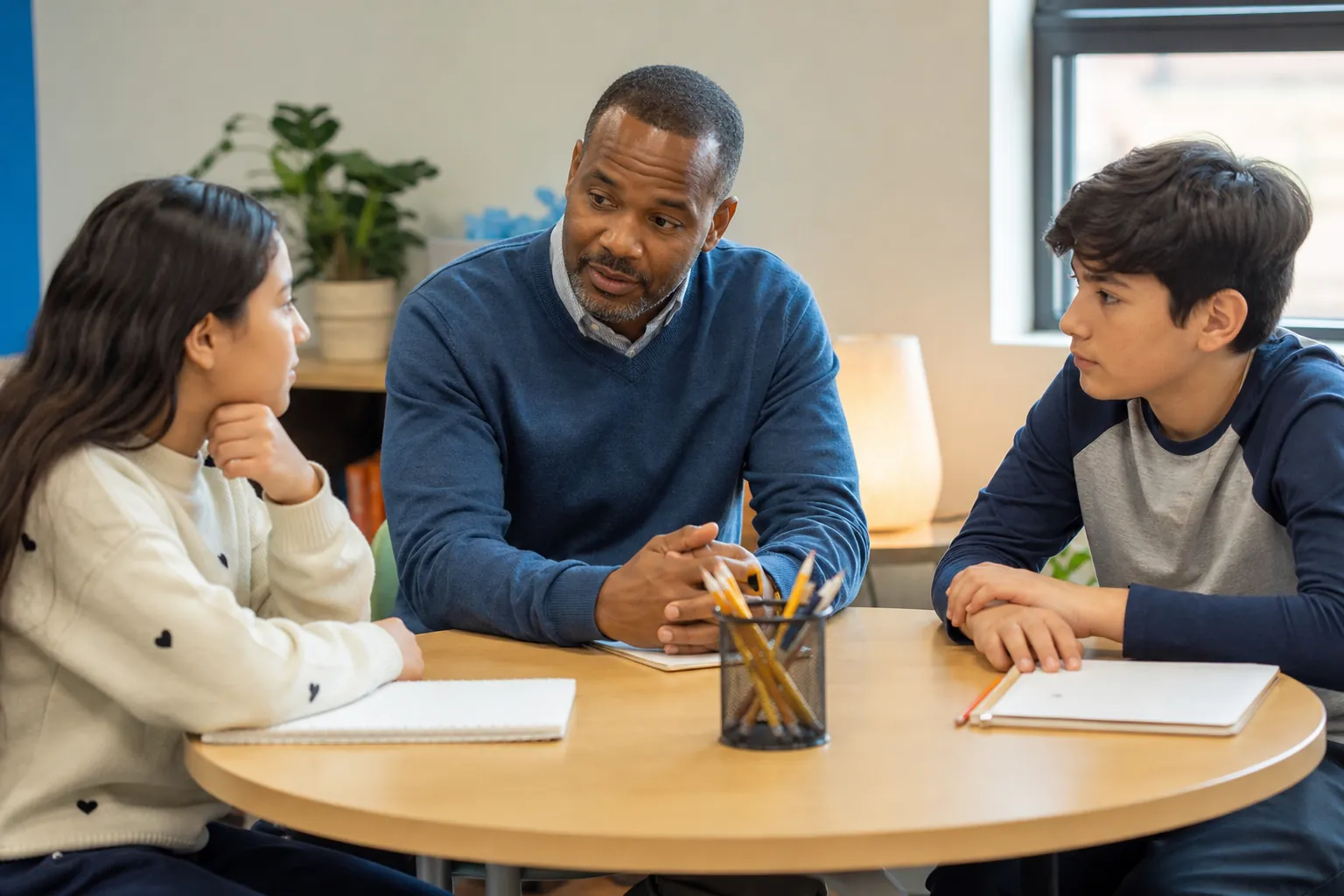
Teachers should also know where the boundary is. A student disclosing harm, making a threat, or showing signs that they need more support should not be handled as a private classroom matter. The school needs a clear reporting path, a timely way to involve the right staff, and a process that protects privacy while ensuring the concern does not disappear into an informal conversation.
Connect the classroom to the school’s larger plan
A classroom routine should never compete with the school’s emergency operations plan. It should make that plan easier to carry out. Teachers need a small set of answers they can locate quickly: how they will receive instructions, how they account for students, where to find essential information, who to contact for immediate support, and what changes when they are not in their usual room.
The U.S. Department of Education’s current emergency-planning guidance emphasizes collaborative planning, training, exercises, and regular review. For a classroom, that means teachers should have a real voice in identifying the details that affect daily execution. They know which hallway becomes crowded, which communication tool is unreliable, what a substitute may not understand, and which students need an additional support plan.
Use the school’s school safety plan as the shared foundation, then make the classroom connection practical. A team might walk through attendance, communication, accessibility, and backup coverage during a normal day rather than only reviewing a plan in a meeting. The school safety checklist can help leaders turn those observations into focused questions instead of a vague request for feedback.
Plan for the classroom that is actually in front of you
Classrooms are not identical, and neither are the people in them. A routine that works for a quiet, familiar group may fall apart when there is a new student, a substitute, a mobility need, a sensory need, a language barrier, a conflict between peers, or a schedule change. Good preparation asks about those realities before a stressful moment.
Consider what each student needs to receive an instruction, move safely, communicate a concern, and stay connected to an adult. Include the people who know those needs best, following the school’s established privacy and support processes. The answer may be a clearer visual cue, a designated check-in adult, a backup route, a translated family message, a plan for medication or mobility equipment, or a short pre-brief before an expected change.
Accessibility is not a side note. It is evidence that a routine works for the full school community. The school safety audit guide can help leaders look beyond what a procedure says on paper and identify where everyday spaces, handoffs, and assumptions create a gap.
Review concerns without blame
Everyday safety learning often begins with something small: a classroom could not hear an announcement, a student did not know where to go, a staff member was unsure who to call, or a transition created friction that left a student feeling isolated. Those moments are useful data. They point to a routine that needs clarity, practice, or support.
After a concern, ask what happened, what was clear, what was missing, and what one change would help next time. Keep the conversation focused on the system rather than on finding someone to fault. A short review might lead to a revised seating plan, clearer visitor communication, an updated classroom folder, a shared expectation for how to call for support, or a better handoff between a teacher and counselor.
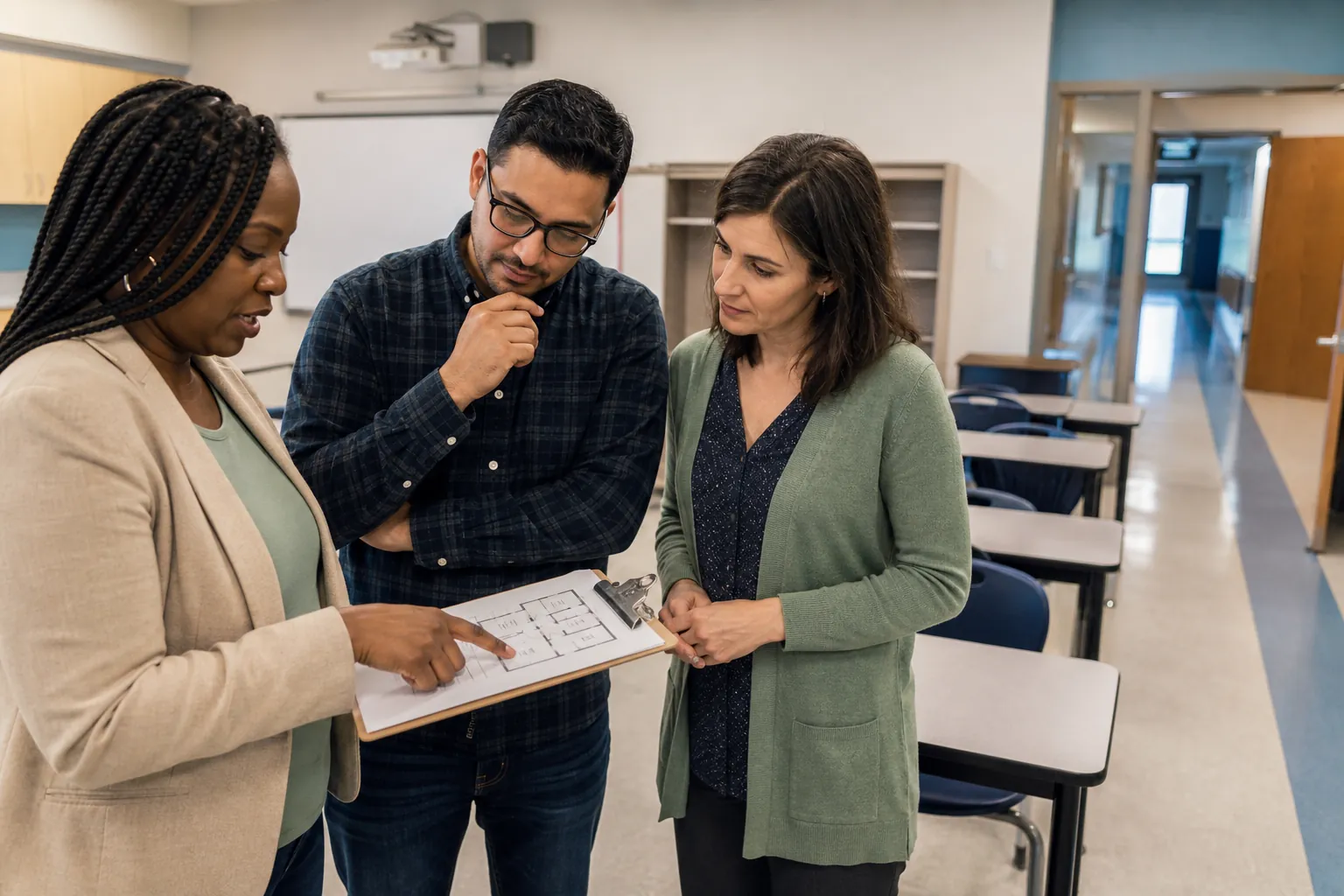
For a broader practice cycle, the guide to school safety drills explains how to choose the lightest practice that can answer a real question. A classroom walkthrough or small tabletop discussion can often reveal a fix before a full-school exercise is needed.
How Dr. Spells helps schools strengthen classroom safety
Dr. Spells brings experience across education, public safety, law, policy, leadership, and community work to conversations that require clear thinking and care for people. His school safety training for teachers helps educators connect day-to-day judgment, communication, student support, and responsible follow-through.
For whole-staff alignment, school staff safety training gives teams a practical space to work through shared awareness and response. Leaders who need a closer look at classroom routines, communication, and readiness can explore a school safety assessment or school safety consulting. Teams ready to discuss their setting can start a booking inquiry.
Frequently Asked Questions
Questions leaders ask about classroom safety.
What does classroom safety include?
Classroom safety includes the daily conditions that help students and adults learn and respond well: clear routines, accessible spaces, respectful expectations, reliable communication, thoughtful support when concerns arise, and a practical connection to the school’s larger safety plan.
How can teachers make a classroom feel safer?
Start by making everyday expectations predictable and respectful. Greet students, teach routines directly, make it easy to ask for help, respond consistently to concerns, and invite feedback when a routine is not working. A safer classroom is built through the small interactions students experience every day.
How does classroom safety connect to the school safety plan?
The classroom is where many parts of a school safety plan become real. Teachers need to understand how to communicate, account for students, support individual needs, and get help during ordinary disruptions and larger emergencies. The school plan should give them clear, usable direction rather than a binder they never see.
What should a teacher do after a classroom safety concern?
Follow the school’s established reporting and support process, document the facts that matter, communicate with the people who need to know, and avoid handling a serious concern alone. After the immediate issue is addressed, use the experience to clarify the routine or support that would make the next response stronger.
Related reading
Keep the work moving.
School Safety Measures That Protect Learning, Too
A practical framework for choosing, testing, and improving school safety measures without losing sight of the people they serve.
Read the guide
How to Build a School Safety Plan That Works
A step-by-step guide for school leaders building a safety plan people can understand, practice, and improve.
Read the guide
A School Safety Checklist for the Work That Matters
A practical school safety checklist for reviewing routines, communication, access, connection, and follow-through.
Read the guide